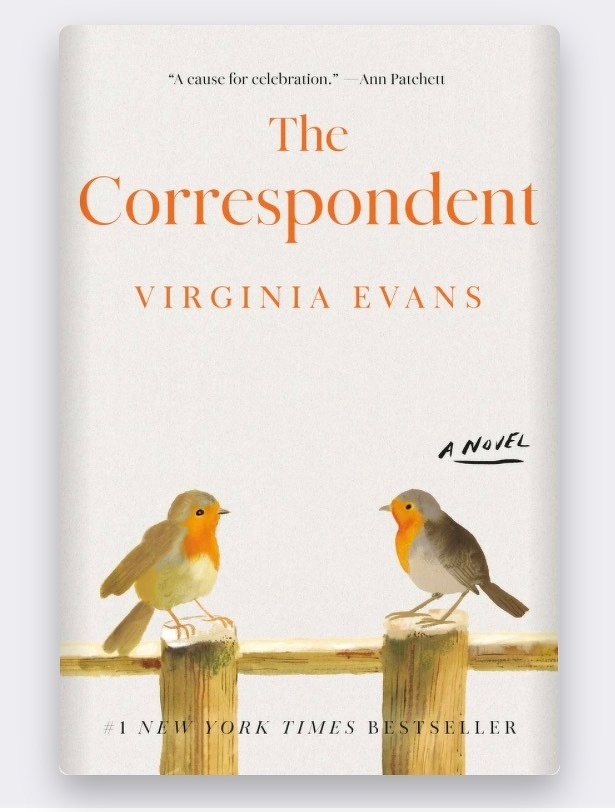
The Correspondent


by Virginia Evans


To call this book unique may be a bit of an overstatement. It is an epistolary work (a work composed of letters) which at least makes it unique to me. This is Evan’s first published novel. She has been writing novels since she was 19 years old. This book was published last year, she was age 39. She wrote eight novels previously that were never picked up for publication. That is true dedication to your craft.

The novel feels to me like it is almost autobiographical. The main character could be the author. I later read in an interview that there is a great deal of the author in the book’s main character. The impression that the book is autobiographical makes it all the more attractive to me since I prefer non-fiction over fiction. With writing like this, I could become a fan of fiction.

I love this book! Here’s the problem for me. Either I’m too lazy, too stupid or I have an undiagnosed cognitive impairment of some sort because I’m having trouble keeping track of all the characters. The book is nothing but letters to and from the different people. I’m picking up the gist of all the interactions but there is a nagging feeling in the back of my mind that I should be keeping some kind of “cheat sheet” of all the characters and their relationship to the protagonist of the novel. I’ll push on and see how it goes. The cat just jumped up on my writing desk and is demanding my attention. Fortunately I remember his name.

Here is the main character, Sybil, talking about her need to write letters:

“If one has committed oneself to the page, the tragedy I’ve just laid out will not apply.” (The tragedy she is referring to here is dying with no legacy to speak of.) “Imagine, the letters one has sent out into the world, the letters received back in turn, are like the pieces of a magnificent puzzle, or, a better metaphor, if dated, the links of a long chain, and even if those links are never put back together, which they will certainly never be, even if they remain for the rest of time dispersed across the earth like the fragile blown seeds of a dying dandelion, isn’t there something wonderful in that, to think that a story of one’s life is preserved in some way, that this very letter may one day mean something, even if it is a very small thing, to someone?”

This is precisely why I have a blog. If you are reading this, you have found it. Sybil has beautifully articulated why I do this.


CONCLUSION

I am amazed the impression this book has had on me. I want to do my own writing now more than ever. But especially I have discovered how deeply moving a work of fiction can be. I have been critical of book clubs in the past, but if I hadn’t agreed to join this club for this selection, I would have missed a tremendious experience. I am thoroughly happy to have read “The Correspondent.”


I enjoy the lessons to be gained from a good book.
I also enjoy the reflection that is part of the journey.

Entries on this site are presented in chronological order.
Use the Contents link at the top of the page to view entries by category.
Entry # 1,770

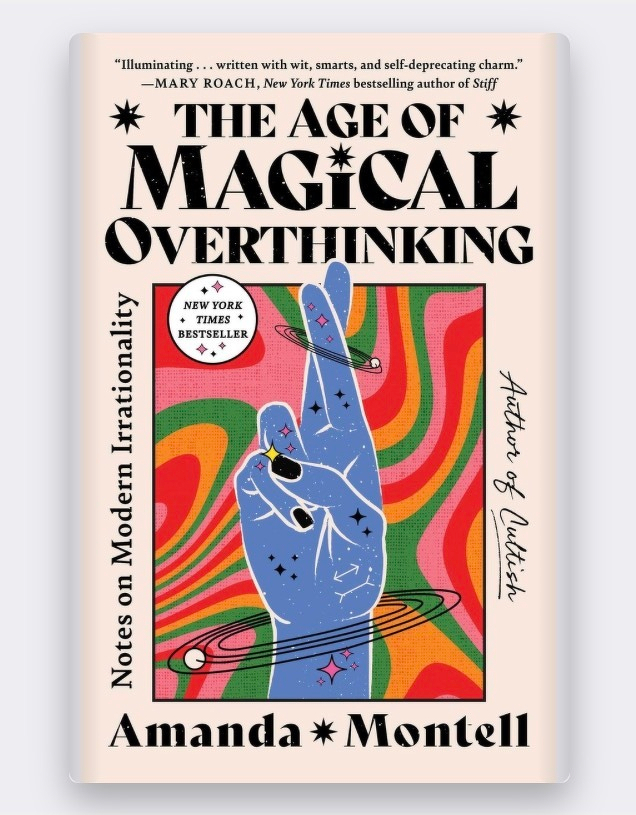
The Age of Magical Overthinking


by Amanda Montell


The Age of Magical Overthinking

We live in an age where we can easily feel overwhelmed. An age of overconsumption that feeds overwhelmed feelings. Part of being overwhelmed is caused by some modern biases that we share as a society. This book explores some of these biases that we carry around with us — many of them without even noticing. The psychological term used is cognative biases. That is a simple (without overthinking) way of saying “self-deception.” What follows is an explanation of some of the cognitive biases plaguing modern society. This is an important work, written in an informal style with plenty of personal examples from the author’s own life.


The Halo Effect Bias

People tend to be overly worshipful.Another attribute of this is “cancel culture.” This effect is manifested by the tendency to make overly broad assumptions about a person based on a single attribute. We see this in our hero worship. Knowing one thing does not mean a person knows everything. Assuming that they do know everything can lead people down some very dark alleys. Not a bias we should subject ourselves to.


The Proportionality Bias

This is the human perception that causes us to search for big causes when big events occur. This bias causes us to overestimate cause-and-effect relationships. It makes us want to look for big (and easy) solutions to problems that are actually complex. People that have trouble seeing complexity in the world around them are particularly susceptible to this effect. You may be familiar with the term “Conspiracy Theory” (who isn’t) That’s what we are talking about here. A conspiracy theory is an explanation that appears to make sense and it offers an emotionally satisfying explanation for some uncomfortable reality.


The Sunk Cost Fallacy

The best explanation for this bias is when you decide you can’t give something up because you have too much invested in it. Think relationships here. Also jobs, political beliefs, and so on, ad inffinitem. In the back of your mind is the idea that things can’t get any worse so they must necessarily get better. The sunk cost fallacy is a mental state that prevents us from moving forward. It prevents us from seeing the damage we are doing to ourselves. We can prevent this bias from controlling our life by acknowledging it and not dismissing it.


The Zero Sum Bias

This bias embodies the notion someone else’s gain is our loss. This is a perfect example of one of my favorite T-Shirt sayings: “Equal rights for everyone does not mean fewer rights for you.” Life is not cake. When all the slices are gone, so is the cake. Life is a cake that never runs out of slices. Don’t be afraid to give a slice to someone else.


The Survivorship Bias

This is the tendency to attribute success to reasons that are not attached to reality. We tend to look outside of ourselves for reasons why we succeeded. To look for reasons greater than ourselves. A near death survivor may attribute their good fortune to “the universe willing” their destiny. This holds true in business, athletics, fine art, war, you name it. Not only do we tend to look outside of ourselves for answers, we also have a tendency to dismiss or ignore the actual reasons. You might call this optimism run rampant. It’s better to take charge of your life and recognize that it is yours and you choose what it will be.


The Recency Illusion

Time, unfortunately though it makes
animals and vegtables bloom and fade
with amazing punctuality, has no
such simple effect upon the mind of man.

--Virginia Woolf

I like to think of this as the “alien” bias. For a brief period of time in 2021 everyone thought the world was coming to an end. It was commonly held that aliens were coming to get us. It was a wide spread societal Illusion. The Recency Illusion is the bias that says since something is new to you (and note worthy) it has to be important. Anything new is more cognitively stimulating than threats that have occurred in the past, even if those threats may still be active in some capacity.


The Overconfidence Bias

This is my favorite bias. (Not the one I exhibit most, the one I like the most.)

Don’t be like the man that covered his face in lemon juice then walked into a bank and held it up without a mask. He did this because lemon juice makes you invisible, everyone knows that right? You may think that’s just stupid, not over confident, but there is a fine line between I.Q. and confidence, sometimes they overlap in dramatic ways — like in the case of our overconfident stick-up man. Grifters, con artists, even successful CEOs all suffer overconfidence. The key is to make sure your affliction is properly channeled. There is a famous study by Cornell Psychologist David Dunning which hypothesized the “Dunning-Kruger Effect. The study demonstrated a statistical correlation between people with the smallest amount of knowledge on a subject consistently proving themselves likeliest to overvalue their expertise. Gosh, that explains a lot doesn’t its it? I can’t tell you if naming the effect after himself (and his research assistant) was overconfidence or not… but it does lead one to wonder.


The Illusary Truth Effect

Beware much repeated claims. Check your sources. With so much information available at our finger tips these days, and much of it unreliable, you can’t be too careful about what you choose to believe. Ultimately what we accept or don’t accept as truth is entirely up to us. This bias comes down to our propensity to believe a claim simply because we have heard it repeated multiple times.


The Confirmation BIas

Beware of people that work backwards from their strongly held beliefs to prove that some new discovery is nothing but bogus fluff — in order that they may continue to live in their long held delusion. Case in point: Dinosaurs are extinct only because God decided not to let them on the ark — therefore they became extinct 2,000 years ago, not 2 million years as fossil remains have proven. We have a tendency as humans to look for reasons, as impossible as they may be simply to confirm beliefs we have difficulty abandoning.


The Fading Affect Bias (Declinism)

Declinism is the false notion that things are worse now than they were in the past. It is difficult to find studies that validate that hypothesis, yet when we look around and talk to people we see many people expressing this notion. The empirical evidence is everywhere. As ancillary evidence, the number of people that report being happily married is almost the same as it was in the 1950’s when this question first started being asked. Other psychology research verifies that people hold on to positive memories with greater emphasis than they do negative memories. This naturally leads to a stronger connection to the pas than if both types of memories carried equal weight in our consciousness. Hence the tendency to glorify the past and decry the present.


The IKEA Effect

We all tend to ascribe a higher value to things that we have made ourselves the to things that we have purchased. It’s why IKEA is such a successful retailer of home furnishings. It’s why I sit at my desk and design the perfect side-table in my head, planning to make one someday. (I actually have four different designs in my head.) “DIY, Reduce, Reuse, Recycle, Pinterest, The Cooking Channel, how-to Reels on Instagram, all are reflections of this increasing trend. In one very interesting study by the Bureau of Labor Statistics, the highest levels of career happiness was reported by loggers. These are people that work with their hands in the outdoors. The answer is clear, go build something!


I enjoy the lessons to be gained from a good book.
I also enjoy the reflection that is part of the journey.

Entries on this site are presented in chronological order.
Use the Contents link at the top of the page to view entries by category.
Entry # 1,769

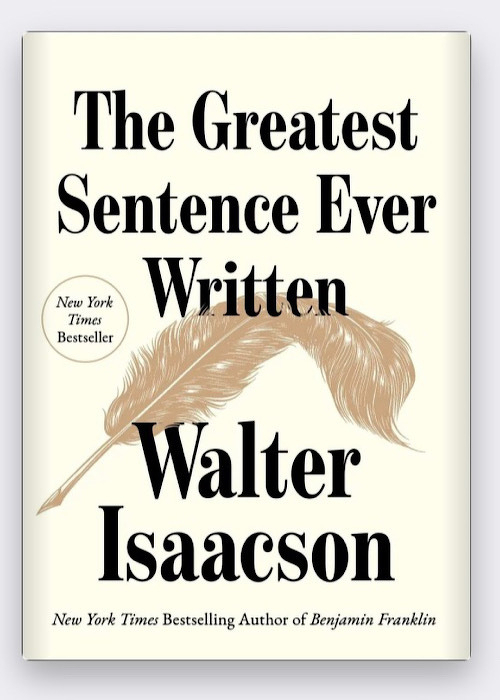
The Greatest Sentence Ever Written


by Walter Isaacson


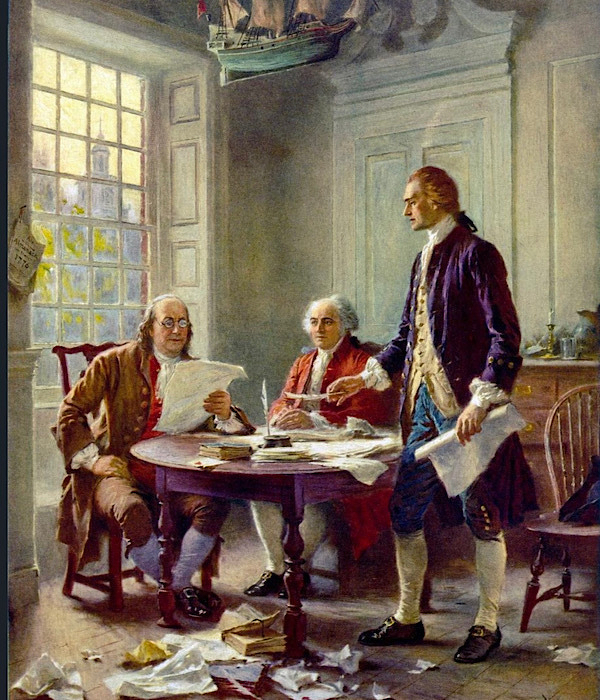
John Adams, Thomas Jefferson, and Benjamin Franklin
drafting the Declaration of Independence.
Painting by Jean Leon Gerome Ferris.


“We hold these truths to be self-evident
that all men are created equal,
that they are endowed by their Creator with certain unalienable Rights,
that among these are Life, Liberty and the pursuit of Happiness.”
Declaration of Independence

“Equal rights for all does not mean fewer rights for you.”
T-Shirt


I enjoy the lessons to be gained from a good book.
I also enjoy the reflection that is part of the journey.

Entries on this site are presented in chronological order.
Use the Contents link at the top of the page to view entries by category.
Entry # 1,768

Reading Log 2025


Books I Enjoyed in 2025


Joy Ride by Kristen Jokinen
Shantaram by Gregory David Roberts
Stuck by Yoni Appelbaum
How Emotionally Mature Are You? by The School of Life
Turning to Stone by Marcia Bjornerud
Greek Philosophy by Helen Gagatsu
Merlins Tour of the Universe by Neil DeGrasse Tyson
The Daily Stoic by Ryan Holiday
The Traveling Cat Chronicles by Hiro Arikawa
The Creative Act by Rick Rubin
The Cat Who Taught Zen by James Norbury
My Friends by Fredrik Backman
Beartown by Fredrik Backman
Stillness is the Key by Ryan Holiday
The Hollow Crown by Eliot A. Cohen
Walking in Wonder by Adam Segel-Moss (Cliff Dancer)
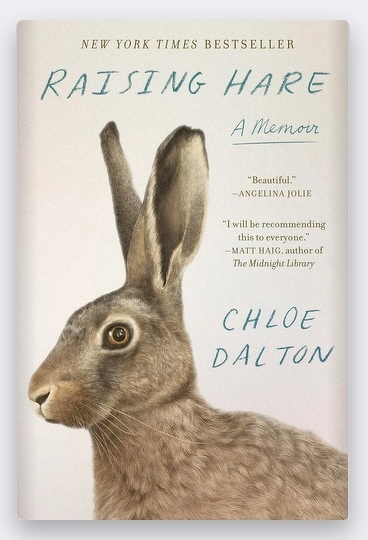
Raising Hare A Memoir by Chloe Dalton
The Paris Library by Janet Skeslien Charles
On Quality by Robert M. Pirsig
How to Write a Sentence and How to Read One by Stanley Fish
Abbey in America Edited by John A. Murray
Shadows on the Koyukuk by Sidney Huntington
Flaubert A Life by Geoffrey Wall


I enjoy the lessons to be gained from a good book.
I also enjoy the reflection that is part of the journey.

Entries on this site are presented in chronological order.
Use the Contents link at the top of the page to view entries by category.
Entry # 1,760

Reading Plan


Great American Novels


Here is a collection of great American novels. What constitutes a great novel is largely a matter for the reader to decide. I hope that after I have worked my way through this list (ambitious) I will have found most or all to have been worth the effort. I have no idea how long it will take to accomplish this task. All I can do is try my best. I know there will be distractions and side-trips along the way. There are too many good books out there to stick exclusively to a single list. Inspiration always plays a role in selecting the next read.I will do my best to work my way through these. I’m looking forward to the journey.


The Great Gatsby

F. Scott Fitzgerald

1925

An American Tragedy

Theodore Dreiser

1925

The Making of Americans

Gertrude Stein

1925

Death Comes for the Archbishop

Willa Cather

1927

A Farewell to Arms

Ernest Hemingway

1929

Passing

Nella Larsen

1929

The Sound and the Fury

William Faulkner

1929

Absalom, Absalom!

William Faulkner

1936

Nightwood

Djuna Barnes

1936

East Goes West

Younghill Kang

1937

Their Eyes Were Watching God

Zora Neale Hurston

1937

U.S.A.

John Dos Passos

1937

Ask the Dust
John Fante
1939

The Big Sleep
Raymond Chandler
1939

The Day of the Locust
Nathanael West
1939

The Grapes of Wrath
John Steinbeck
1939

Native Son
Richard Wright
1940

The Heart Is a Lonely Hunter
Carson McCullers
1940

A Time to Be Born
Dawn Powell
1942

All the King’s Men
Robert Penn Warren
1946

The Street
Ann Petry
1946

In a Lonely Place
Dorothy B. Hughes
1947

The Mountain Lion
Jean Stafford
1947

The Catcher in the Rye
J. D. Salinger
1951

Charlotte’s Web
E. B. White
1952

Invisible Man
Ralph Ellison
1952

Fahrenheit 451
Ray Bradbury
1953

Maud Martha
Gwendolyn Brooks
1953

The Adventures of Augie March
Saul Bellow
1953

Lolita
Vladimir Nabokov
1955

Giovanni’s Room
James Baldwin
1956

Peyton Place
Grace Metalious
1956

Deep Water
Patricia Highsmith
1957

No-No Boy
John Okada
1957

On the Road
Jack Kerouac
1957

The Haunting of Hill House
Shirley Jackson
1959

Catch-22
Joseph Heller
1961

A Wrinkle in Time
Madeleine L’Engle
1962

Another Country
James Baldwin
1962

One Flew Over the Cuckoo’s Nest
Ken Kesey
1962

Pale Fire
Vladimir Nabokov
1962

The Zebra-Striped Hearse
Ross Macdonald
1962

The Bell Jar
Sylvia Plath
1963

The Group
Mary McCarthy
1963

The Crying of Lot 49
Thomas Pynchon
1966

A Sport and a Pastime
James Salter
1967

Couples
John Updike
1968

Do Androids Dream of Electric Sheep?
Philip K. Dick
1968

Divorcing
Susan Taubes
1969

Portnoy’s Complaint
Philip Roth
1969

Slaughterhouse-Five
Kurt Vonnegut
1969

Are You There God? It’s Me, Margaret
Judy Blume
1970

Desperate Characters
Paula Fox
1970

Play It as It Lays
Joan Didion
1970

Log of the S.S. The Mrs Unguentine
Stanley Crawford
1972

Mumbo Jumbo
Ishmael Reed
1972

Sula
Toni Morrison
1973

The Revolt of the Cockroach People
Oscar Zeta Acosta
1973

Oreo
Fran Ross
1974

The Dispossessed
Ursula K. Le Guin
1974

Winter in the Blood
James Welch
1974

Corregidora
Gayl Jones
1975

Speedboat
Renata Adler
1976

Ceremony
Leslie Marmon Silko
1977

Song of Solomon
Toni Morrison
1977

A Contract With God
Will Eisner
1978

Dancer From the Dance
Andrew Holleran
1978

The Stand
Stephen King
1978

Kindred
Octavia E. Butler
1979

The Dog of the South
Charles Portis
1979

Housekeeping
Marilynne Robinson
1980

The Salt Eaters
Toni Cade Bambara
1980

Little, Big: Or, the Fairies’ Parliament
John Crowley
1981

Oxherding Tale
Charles Johnson
1982

Machine Dreams
Jayne Anne Phillips
1984

Blood Meridian
Cormac McCarthy
1985

A Summons to Memphis
Peter Taylor
1986

Watchmen
Alan Moore and Dave Gibbons
1986

Beloved
Toni Morrison
1987

Dawn
Octavia E. Butler
1987

Geek Love
Katherine Dunn
1989

Tripmaster Monkey
Maxine Hong Kingston
1989

Dogeaters
Jessica Hagedorn
1990

American Psycho
Bret Easton Ellis
1991

How the García Girls Lost Their Accents
Julia Alvarez
1991

Mating
Norman Rush
1991

Bastard Out of Carolina
Dorothy Allison
1992

The Secret History
Donna Tartt
1992

So Far From God
Ana Castillo
1993

Stone Butch Blues
Leslie Feinberg
1993

The Shipping News
Annie Proulx
1993

Native Speaker
Chang-rae Lee
1995

Sabbath’s Theater
Philip Roth
1995

Under the Feet of Jesus
Helena María Viramontes
1995

Infinite Jest
David Foster Wallace
1996

I Love Dick
Chris Kraus
1997

Underworld
Don DeLillo
1997

The Intuitionist
Colson Whitehead
1999

Blonde
Joyce Carol Oates
2000

House of Leaves
Mark Z. Danielewski
2000

The Amazing Adventures of Kavalier & Clay
Michael Chabon
2000

The Last Samurai
Helen DeWitt
2000

The Quick and the Dead
Joy Williams
2000

Erasure
Percival Everett
2001

I, the Divine
Rabih Alameddine
2001

The Corrections
Jonathan Franzen
2001

Caramelo
Sandra Cisneros
2002

Perma Red
Debra Magpie Earling
2002

The Russian Debutante’s Handbook
Gary Shteyngart
2002

The Namesake
Jhumpa Lahiri
2003

Veronica
Mary Gaitskill
2005

The Brief Wondrous Life of Oscar Wao
Junot Díaz
2007

A Visit From the Goon Squad
Jennifer Egan
2010

I Hotel
Karen Tei Yamashita
2010

Open City
Teju Cole
2011

Salvage the Bones
Jesmyn Ward
2011

The Round House
Louise Erdrich
2012

Americanah
Chimamanda Ngozi Adichie
2013

Nevada
Imogen Binnie
2013

A Brief History of Seven Killings
Marlon James
2014

Family Life
Akhil Sharma
2014

Fates and Furies
Lauren Groff
2015

The Fifth Season
N. K. Jemisin
2015

The Sellout
Paul Beatty
2015

The Sympathizer
Viet Thanh Nguyen
2015

Amiable With Big Teeth
Claude McKay
2017

Lincoln in the Bardo
George Saunders
2017

Sabrina
Nick Drnaso
2018

Severance
Ling Ma
2018

There There
Tommy Orange
2018

Lost Children Archive
Valeria Luiselli
2019

Nothing to See Here
Kevin Wilson
2019

The Old Drift
Namwali Serpell
2019

No One Is Talking About This
Patricia Lockwood
2021

The Love Songs of W. E. B. Du Bois
Honorée Fanonne Jeffers
2021

Biography of X
Catherine Lacey
2023


I enjoy the lessons to be gained from a good book.
I also enjoy the reflection that is part of the journey.

Entries on this site are presented in chronological order.
Use the Contents link at the top of the page to view entries by category.
Entry # 1,759
Reading Plan


Other Works Worth Reading


Here is a collection of other works and authors. I’m going to stop planning now because I think I may have exceeded my reading capacity, at least with the years I have remaining to accomplish this list. I have no idea how long it will take to accomplish this task. All I can do is try my best. I know there will be distractions and side-trips along the way. There are too many good books out there to stick exclusively to a single list (or a second list). Inspiration always plays a role in selecting the next read. I will do my best to work my way through these. I’m looking forward to the journey.


Titles


The Magic Mountain
Buddenbrooks
Les Miserables
The Return of the Native
Essays
The Third Policeman
Letters to Eckermann
Lord Jim
Hamlet
King Lear
Moby Dick
The Sun Also Rises


Authors


Whitman
Thoreau
Twain
Joseph Campbell
Gary Snyder
Annie Dillard
Basho
Cervantes
Homer
John Muir
Chekhov
Dostoyevsky
Camu
Beckett
Nietzsche


Masters


Zen, Muslim, Taoist, Hassidic, Hindu


I enjoy the lessons to be gained from a good book.
I also enjoy the reflection that is part of the journey.

Entries on this site are presented in chronological order.
Use the Contents link at the top of the page to view entries by category.
Entry # 1,758