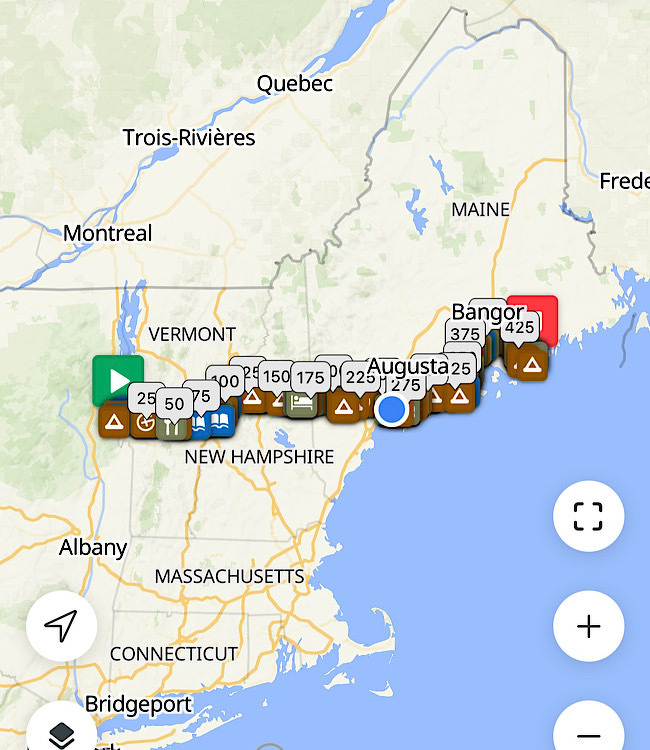
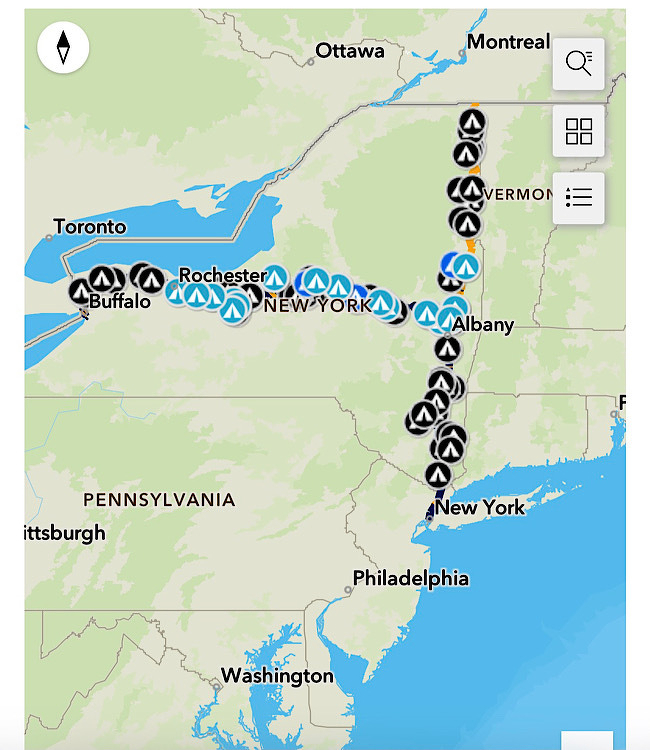
Northern Tier - Section 1 Map
Section 1, Anacortes, WA to Sandpoint ID, 460 Miles


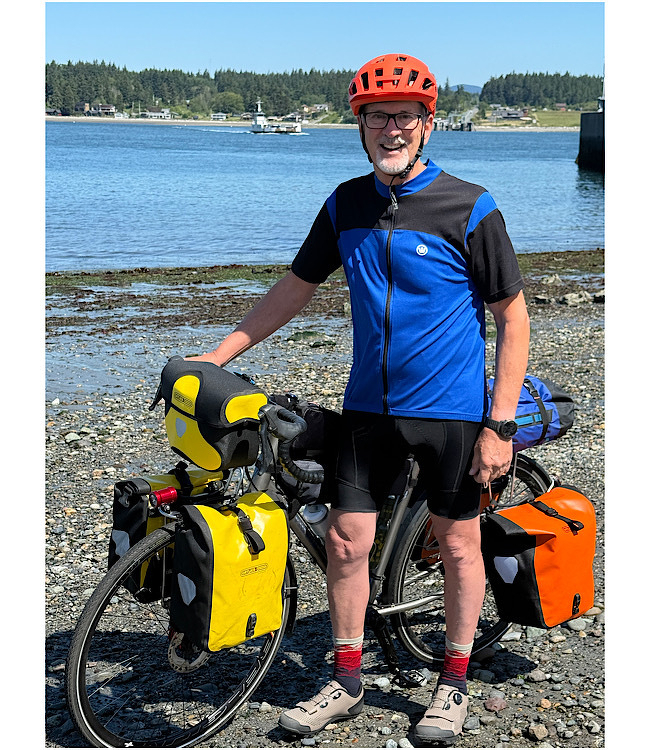
The Adventure Cycling Association (ACA) has established many classic bicycle touring routes across the United States, possibly none more scenic than the Northern Tier Route. The Southern Tier and the TransAm are the other two classic transcontinental routes. I have ridden the Southern Tier and the TransAm, the Southern in 2018 and the TransAm in 2023. It’s time to complete the trifecta.
The Northern Tier is the longest of the three routes. I plan to do it solo unless there are others that want to join. My intent is to camp and cook most of the time. From time-to-time I will be taking meals at restaurants along the way and staying in motels or hostels. My partner is planning to sag me the first few days, likely across the state of Washington. The would be the first 400 miles. After that she will meet me along the route in a couple of different places for some rest days and to enjoy some of the many sites along the route.
I’ll be starting the tour in Anacortes Washington on June 1st and finish in Bar Harbor Maine. This makes sense for me because I live in Central Oregon and Anacortes is a one day drive from my doorstep.
There are four major mountain passes along the route. It will be challenging. I believe nows the right time to have a go at the Northern Tier. I’ve been given the gift of cycling and I’m not getting any younger. I’m not world class, but I enjoy the experience and find it challenging and also exhilarating. I will be using the ACA’s digital map set to navigate the route.
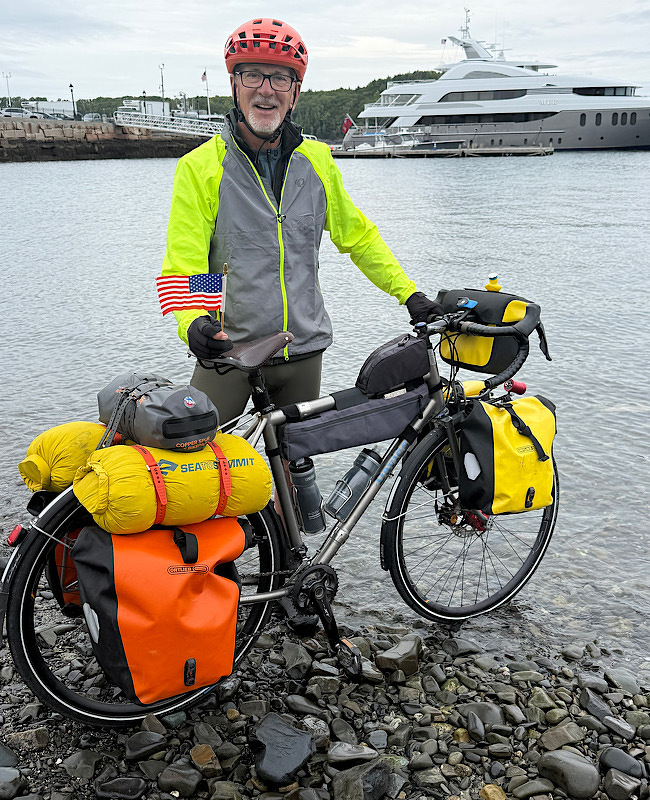
I ride a custom titanium road bike built by Bill Davidson in Seattle Washington. I’ll be carrying my gear in Ortlieb front and rear panniers on Nitto Campee touring racks. I have a hub generator for the front light. I would also like to use the hub generator to keep my cell phone charged, but I’m still working out the details on that. There are other options for charging, including solar. Since this route presents some road challenges, narrow shoulders in places and both truck and recreational traffic on the road, I’ll also be using look-back radar to keep me apprised of what is behind me. That is another piece of equipment to keep charged, so I may have to add a second generator to the bike. I might go with a simple handlebar mirror in lieu of radar, or I might opt for both. The rest of the equipment is what you would expect a trekking backpacker to carry.
For the mathematicians out there, here are some calculations you might like. These are approximations only.
As I get closer to the start date these will be refined. Once on the road these are subject to change.
I typically start riding early in the morning. That gives me the most options at the end of the day for finding accommodations, or setting up camp and cooking. I like to relax after dinner, unwind, write a bit about the day and generally get ready for the next day. A late start to the day’s riding just makes all that a lot more difficult. I do not ride after dark.
Keep scrolling. You will find information below about:
Each of the 11 sections on the route. These pages have been compiled from the official ACA mapping information.
My proposed itinerary. This is a suggested itinerary. Riding circumstances are variable. Weather, terrain, physical conditioning and a host of other factors could have an impact on this plan. The plan does not show rest days and will likely be modified before heading out and during the ride itself.
My personal training plan. Caveat: I’m not an expert in developing training plans but I think this is a good start. It’s a 13 week plan. Each week I will update that week’s training plan with pertinent commentary (just for fun).
I will be posting additional information here about sight seeing, side trips, campgrounds and other accommodations as I develop those.
You can follow me on the journey. Once the tour begins, I will be posting here every day, Use the link “Bicycling the Northern Tier” on the Contents page to filter and view just those entries pertaining to the Northern Tier tour. (There’s a lot of other stuff here that may or may not be of interest. That is of course a matter of opinion and taste.


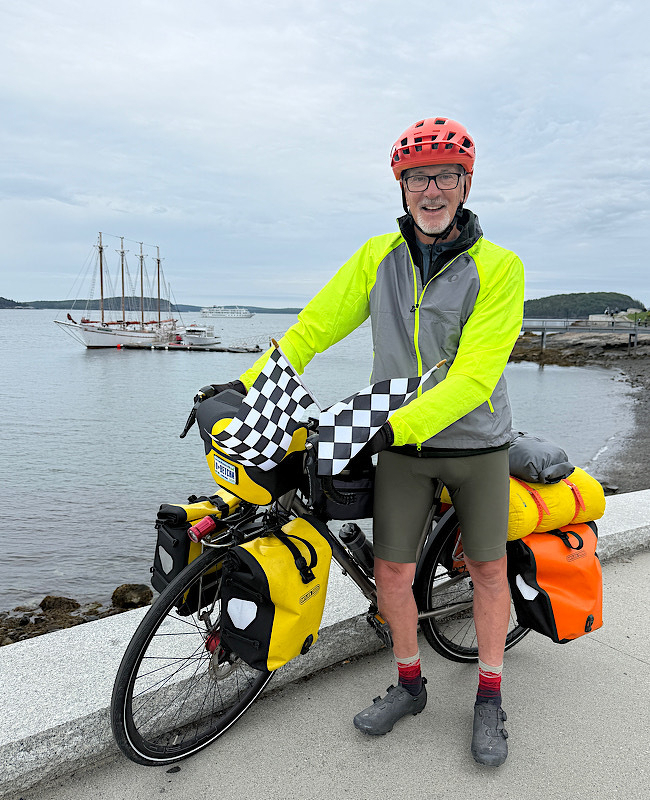
Here is one of my favorite photos from my TransAm tour in 2023.


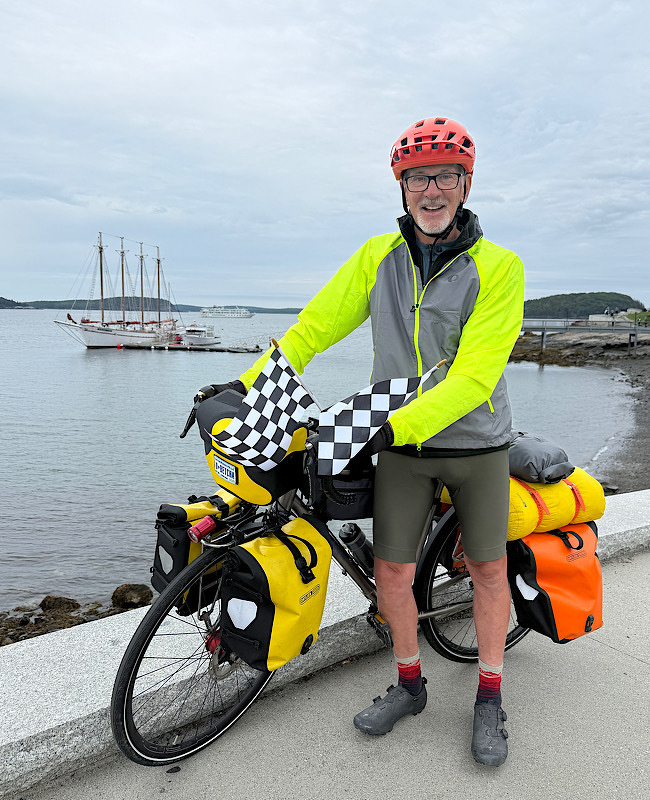
Here is one of my favorite photos from my SouthernTier tour in 2018.


When I had the bike built back in 2018 I didn’t know much about dynamo hubs. I had a SON Deluxe added to the build but it only puts out 2.8w. That wasn’t a huge consideration for my first two tours because I was using paper maps for navigation. This is 2027 and I’ll be navigating digitally this time so keeping the phone charged is a must. The Schmidt SON Deluxe dynamo hub isn’t going to cut it.
This time around I’m probably going to go with the Schmidt SON 28. That is a high output dynamo at lower touring speeds. I will need to find a wheel builder that can put this together for me. It will be important to be able to take the headlight out of the circuit when maximum charging is needed. I’ll be charging to a power bank, not directly to the phone. That will give me more options.


FIre!
The winter season rain and snow accumulation is significantly below normal in the U.S. This makes the likelihood of fires this summer, well, very likely. One Meteorologist in California recently said he was “scared shitless.” Based on this map from a recent Washington Post article…

It looks like this year the Northern Tier is the best choice of the three ACA trans-continental bicycle routes. The TransAm looks like it carries the most risk of wildfires enroute, Even the Southern Tier route looks like it carries with it a likelihood of fire and smoke hazard. What this means is that I will be carrying masks in my panniers. Hopefully I won’t need them. The worst case scenario is of course the need to reroute. I want to stick with the ACA route if at all possible, but if rerouting becomes necessary, I do carry the Komoot app and I won’t hesitate to ask for advice from locals along the way.

This is a rough attempt at an overall itinerary. It’s tough to plan rest days with accuracy. What is shown here is a best guess. It’s safe to say that about every seven days some rest will be needed. My experience on my last two trans-continental tours has been when resting, two days is reasonable, but more could be required depending on overall health and fitness. I’m not as young as I used to be. I was 65 years old on my first trans-con, 68 on my second, now I’m a bit older at 72. All three tours are on different routes. This tour will complete the trans-continental trifecta. Since I haven’t done this route before, it basically comes down to a guess…
| Ride Day | Date | Start | End | Miles |
|---|---|---|---|---|
| 1 | 6/1 | Anacortes | Sedro Woolley | 25 |
| 1 | 6/1 | Sedro Woolley | Marblemount | 41 |
| 2 | 6/2 | Marblemount | Mazama | 74 |
| 3 | 6/3 | Mazama | Twisp | 25 |
| 3 | 6/3 | Twisp | Okanogan | 39 |
| 3 | 6/3 | Okanogan | Tonasket | 28 |
| 4 | 6/4 | Tonasket | Republic | 39 |
| 5 | 6/5 | Republic | Kettle Falls | 41 |
| 6 | 6/6 | Kettle Falls | Ione | 46 |
| 7 | 6/7 | Ione | Newport | 49 |
| 8 | 6/8 | Newport WA | Sandpoint ID | 29 |
| — | 6/9 | **Rest** | **Rest** | 0 |
| — | 6/10 | **Rest** | **Rest** | 0 |
| Ride Day | Date | Start | End | Miles |
|---|---|---|---|---|
| 9 | 6/11 | Sandpoint | Clark Fort | 28 |
| 10 | 6/12 | Clark Fort ID | Troy MT | 61 |
| Ride Day | Date | Start | End | Miles |
|---|---|---|---|---|
| 11 | 6/13 | Troy | Libby | 20 |
| 12 | 6/14 | Libby | Eureka | 76 |
| 13 | 6/15 | Eureka | Olney | 36 |
| 13 | 6/15 | Olney | Whitefish | 21 |
| — | 6/16 | **Rest** | **Rest** | 0 |
| — | 6/17 | **Rest** | **Rest** | 0 |
| 14 | 6/18 | Whitefish | Apgar | 20 |
| 14 | 6/18 | Apgar | Essex | 26 |
| 15 | 6/19 | Essex | East Glacier | 28 |
| 16 | 6/20 | East Glacier | Browning | 12 |
| 16 | 6/20 | Browning | Cut Bank | 26 |
| 17 | 6/21 | Cut Bank | Shelby | 38 |
| — | 6/22 | **Rest** | **Rest** | 0 |
| — | 6/23 | **Rest** | **Rest** | 0 |
| 18 | 6/24 | Shelby | Inverness | 71 |
| 19 | 6/25 | Inverness | Havre | 74 |
| 20 | 6/26 | Havre | Chinook | 25 |
| 20 | 6/27 | Chinook | Fort Belknap | 30 |
| — | 6/28 | **Rest** | **Rest** | 0 |
| 21 | 6/29 | Fort Belknap | Dodson | 29 |
| 22 | 6/30 | Dodson | Malta | 22 |
| 22 | 6/30 | Malta | Saco | 28 |
| 23 | 71 | Saco | Glasgow | 56 |
| 24 | 7/2 | Glasgow | Frazer | 40 |
| 25 | 7/3 | Frazer | Wolf Point | 24 |
| — | 7/4 | **Rest** | **Rest** | 0 |
| 26 | 7/5 | Wolf Point | VIda | 29 |
| 26 | 7/5 | VIda | Circle | 43 |
| 27 | 7/6 | Circle | Glendive | 63 |
| 28 | 7/7 | Glendive | Wibaux | 41 |
| 29 | 7/8 | Wibaux MT | Medora ND | 52 |
| — | 7/9 | **Rest** | **Rest** | 0 |
| Ride Day | Date | Start | End | Miles |
|---|---|---|---|---|
| 30 | 7/10 | Medora | Dickinson | 47 |
| 30 | 7/10 | Dickinson | Hebron | 40 |
| 31 | 7/11 | Hebron | Glen Ullin | 15 |
| 31 | 7/11 | Glen Ullin | Bismark | 64 |
| 32 | 7/12 | Bismark | Moffit | 32 |
| 32 | 7/12 | Moffit | Hazelton | 14 |
| — | 7/13 | **Rest** | **Rest** | 0 |
| — | 7/14 | **Rest** | **Rest** | 0 |
| 33 | 7/15 | Hazelton | Napoleon | 35 |
| 33 | 7/15 | Napoleon | Gackle | 41 |
| 34 | 7/16 | Gackle | Litchville | 58 |
| 35 | 7/17 | Litchville | Enderlin | 36 |
| 35 | 7/17 | Enderlin | Kindred | 32 |
| 36 | 7/18 | Kindred | Fargo | 30 |
| — | 7/19 | **Rest** | **Rest** | 0 |
| — | 7/20 | **Rest** | **Rest** | 0 |
| Ride Day | Date | Start | End | Miles |
|---|---|---|---|---|
| 37 | 7/21 | Fargo ND | Hitterdal MN | 32 |
| 37 | 7/21 | Hatterdal | Richwood | 25 |
| 38 | 7/22 | Richwood | Two Inlets | 36 |
| 38 | 7/22 | Two Inlets | Lake Itasca | 23 |
| 39 | 7/23 | Lake Itasca | Bemidji | 38 |
| 39 | 7/23 | Bemidji | Walker | 32 |
| 40 | 7/24 | Walker | Hackensack | 13 |
| — | 7/25 | **Rest** | **Rest** | 0 |
| — | 7/26 | **Rest** | **Rest** | 0 |
| 41 | 7/27 | Hackensack | Backus | 8 |
| 41 | 7/27 | Backus | Pine River | 10 |
| 41 | 7/27 | Pine River | Peguot Lakes | 10 |
| 41 | 7/27 | Peguot Lakes | Nisswa | 6 |
| 41 | 7/27 | Nisswa | Merrifield | 7 |
| 42 | 7/28 | Merrifield | Fort Ripley | 31 |
| 42 | 7/28 | Fort Ripley | Little Falls | 17 |
| 42 | 7/28 | Little Falls | Bowlus | 14 |
| 43 | 7/29 | Bowlus | Morrill | 31 |
| 43 | 7/29 | Morrill | Milaca | 25 |
| 44 | 7/30 | Milaca | Dalbo | 19 |
| 44 | 7/30 | Dalbo | Harris | 28 |
| — | 7/31 | **Rest** | **Rest** | 0 |
| — | 8/1 | **Rest** | **Rest** | 0 |
| Ride Day | Date | Start | End | Miles |
|---|---|---|---|---|
| 45 | 8/2 | Harris | Osceola WI | 40 |
| 46 | 8/3 | Osceola | Stillwater | 33 |
| 46 | 8/3 | Stillwater | Minnespolix | 29 |
| 47 | 8/4 | Minnespolix | Hager City | 78 |
| 48 | 8/5 | Hager City | Maiden Rock | 14 |
| 48 | 8/5 | Maiden Rock | Alma | 32 |
| — | 8/6 | **Rest** | **Rest** | 0 |
| 49 | 8/7 | Alma | Trempealeau | 37 |
| 49 | 8/7 | Trempealeau | La Crosse | 27 |
| 50 | 8/8 | La Crosse | Lansing IA | 36 |
| Ride Day | Date | Start | End | Miles |
|---|---|---|---|---|
| 51 | 8/9 | Lansing | Elkader | 43 |
| 52 | 8/10 | Elkader | Dyersville | 42 |
| 53 | 8/11 | Dyersville | Cascade | 20 |
| 54 | 8/12 | Cascade | Muscatine | 74 |
| — | 8/13 | **Rest** | **Rest** | 0 |
| Ride Day | Date | Start | End | Miles |
|---|---|---|---|---|
| 55 | 8/14 | Muscatine | Cambridge | 54 |
| 56 | 8/15 | Cambridge | Henry | 57 |
| 57 | 8/16 | Henry | Wenona | 22 |
| 57 | 8/16 | Wenona | Odell | 35 |
| 58 | 8/17 | Odell | Rensselaer IN | 84 |
| — | 8/18 | **Rest** | **Rest** | 0 |
| — | 8/18 | **Rest** | **Rest** | 0 |
| Ride Day | Date | Start | End | Miles |
|---|---|---|---|---|
| 59 | 8/19 | Rensselaer | Buffalo | 28 |
| 59 | 8/19 | Buffalo | Denver | 45 |
| 60 | 8/20 | Denver | Monroeville | 77 |
| 61 | 8/21 | Monroeville | Defiance (OH) | 45 |
| — | 8/22 | **Rest** | **Rest** | 0 |
| Ride Day | Date | Start | End | Miles |
|---|---|---|---|---|
| 62 | 8/23 | Defiance | Bowling Green | 46 |
| 63 | 8/24 | Bowling Green | Fremont | 38 |
| 64 | 8/25 | Fremont | Huron | 46 |
| 65 | 8/26 | Huron | Cleveland | 50 |
| — | 8/27 | **Rest** | **Rest** | 0 |
| — | 8/28 | **Rest** | **Rest** | 0 |
| 66 | 8/29 | Cleveland | Painesville | 33 |
| 66 | 8/29 | Painesville | Conneaut | 47 |
| 67 | 8/30 | Conneaut OH | Erie PA | 33 |
| 67 | 8/30 | Erie PA | Westfield NY | 31 |
| — | 8/31 | **Rest** | **Rest** | 0 |
Note: I’m hoping to take in a Guardians game in Cleveland.
| Ride Day | Date | Start | End | Miles |
|---|---|---|---|---|
| 68 | 9/1 | Westfield | Dunkirk | 19 |
| 68 | 9/1 | Dunkirk | Orchard Park | 46 |
| 69 | 9/2 | Orchard Park | Buffalo | 12 |
| 69 | 9/2 | Buffalo | Lockport | 31 |
| 70 | 9/3 | Lockport | Albion | 28 |
| 70 | 9/3 | Albion | Rochester | 34 |
| 71 | 9/4 | Rochester | Wolcott | 63 |
| — | 9/5 | **Rest** | **Rest** | 0 |
| — | 9/6 | **Rest** | **Rest** | 0 |
| 72 | 9/7 | Wolcott | Pulaski | 54 |
| 73 | 9/8 | Pulaski | Osceola | 27 |
| 73 | 9/8 | Osceola | Boonville | 24 |
| 74 | 9/9 | Boonville | Long Lake | 75 |
| 75 | 9/10 | Long Lake | Toconderoga | 60 |
| — | 9/11 | **Rest** | **Rest** | 0 |
| — | 9/12 | **Rest** | **Rest** | 0 |
| Ride Day | Date | Start | End | Miles |
|---|---|---|---|---|
| 76 | 9/13 | Toconderoga NY | Sharoo VT | 71 |
| 77 | 9/14 | Sharoo | Haverhill NH | 35 |
| 78 | 9/15 | Haverhill NH | Conway NH | 76 |
| — | 9/16 | **Rest** | **Rest** | 0 |
| Ride Day | Date | Start | End | Miles |
|---|---|---|---|---|
| 79 | 9/17 | Conway NH | Lewiston ME | 65 |
| 80 | 9/18 | Lewiston | Brunswick | 23 |
| 80 | 9/18 | Brunswick | Waldoboro | 42 |
| 81 | 9/19 | Waldoboro | Rockport | 20 |
| 82 | 9/20 | Rockport | Bucksport | 39 |
| 82 | 9/20 | Bucksport | Bar Harbor | 42 |
| Ride Days | Start Date | End Date | Miles / Avg | Elevation / Avg |
|---|---|---|---|---|
| 82 | 6/1 | 9/20 | 4,517 / 55 | 191,000 / 2,500 |
Averages are per/day.

Highlights of this section are the Cascade Mountain Range, the plains of north eastern Washington and the mountains of northern Idaho. The Anacortes ferry terminal is the western terminus of the Northern Tier bicycle route and starting point for my tour. The first climb out of Anacortes is over Rainy Pass and Washington Pass in the North Cascades. This will make for a challenging start to the tour. I am anticipating sag support for this Section of the tour. I plan to ride self-supported from Sandpoint to the finish in Bar Harbor Maine.


One of the highlights of this section is the passage through Glacier National Park. Carved by glaciers 100 million years ago, the scenery through the park is spectacular. There is an alternate route that diverts into Canada. I’m planning to take the alternate. Passport required.


Buffalo Jump State Park just west of Great Falls is where indigenous people used the natural mile-long sandstone cliff to stampede buffalo when harvesting them for meat, bone, and fur. There is a short hiking trail at the base of the cliff where you can see bones to this day. From the top of the cliff there is a spectacular panorama of the Missouri River, the Rocky Mountain front, and the buttes and grasslands of the Great Plains.
Great Falls was named for the falls on the Missouri River found here. The falls were a formidable obstacle to the Lewis and Clark expedition when they passed through this territory. The expedition spent several weeks negotiating the 18 mile portage. Today the falls are obscured by hydroelectric development.


Welcome to the Great Plains in all their glory. Created by an enormous inland sea that stretched from the Gulf of Mexico to the Arctic, the plains are made from deposits left by the receding sea some 70 million years ago. The rolling prairie seen today was sculpted by the Wisconsin Glacier as it melted 25,000 years ago. The route follows that of the Red River Valley. The valley is one of the world’s finest for producing small grains. A highlight of travel through North Dakota is spotting Canadian Geese and the occasional Coyote. Remember: “Don’t get cozy with a begging Coyote.” Those signs are prevalent in Joshua Tree National Park in California, but the message applies equally here.


Continuing through the RedRiver Valley you gradually transition to a more lush and moister climate in Minnesota. There is a robust cycling culture in Minnesota so it’s not surprising to meet other cyclists along the route. Logging was a major industry here between 1860 and 1900. One treat is the sampling of wild rice harvested by the Ojibewe people. Try some if you get a chance. The Ojibewe people harvest the grain by canoe on reservation rivers and lakes. The rice is sold around the world as a delicacy and still serves as an important part of the native people’s diet.


This section of the tour heads south to Minneapolis and St. Paul. With the arrival in 1823 of the first steamboat to navigate the Mississippi River this far north, the twin cities began their growth which ultimately would make them the largest cities in Minnesota. Lakes and ponds, grassy fields, meadows and marshes can be found in abundance. Wildlife is diverse and consists of a veritable smorgasbord of plants, animals, birds and insects, including the state’s unofficial bird, the mosquito.


As you move south through this section of the route the Mississippi Valley widens. It now reaches points where the valley can span several miles in width. The main crop is no longer wheat. Now you will see fields of corn, oats and soybeans. Livestock, dairy, poultry and apple orchards are also important industries. The route passes Effigy Mound National Monument. Covering some three square miles, the monument protects over 200 ancient peoples burial sites dating back approximately 2,500 years. The monument also offers hiking trails that wander through beautiful hardwood forests. In the summer months wildflowers are abundant. One such, the Day Lilly, is actually an imported species that has gone wild.


Now you are entering the “Grand Prairie.” This may be the richest soil in the world all due to glacial activity. This originally brought settlers from the Appalachians and the South. To open the territory, railroads with many spur lines were built in the early 19th century. This brought tradespeople as well as farmers and the proverbial minister, now all hallmarks of this region. Still prevalent today is a strong Protestant tradition with several well known colleges training future generations of pastors. As you reach the end of this section the terrain gradually changes as you leave the Mississippi River plain. With this change comes smaller farms and more diversified farming.